Laser-Assisted Hatching is an advanced laboratory procedure in assisted reproductive treatments that increases the chances of embryo implantation. In this highly advanced technique, a precision laser creates a tiny opening in the outer shell that surrounds the embryo. It is known as the zona that may stiffen and lift off sometimes so that the embryo can implant naturally.
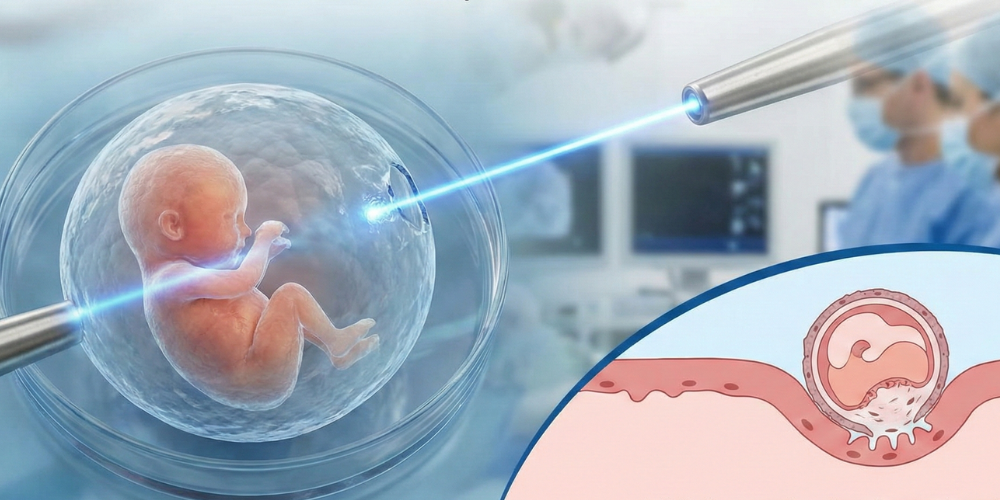
It is beneficial for couples who had repeat IVF failures, advanced maternal age, and embryos with thicker shells. By enabling the embryo to naturally hatch, Laser-Assisted Hatching increases the chances of optimal timing and environmental conditions for implantation.
Each IVF technique invented in today's world is to overcome barriers against conception. LAH is an innovation that addresses implantation impediments. A valuable embryo may not implant because of an improper hatching process from its outer layer. This technique would assist in a natural biological step to the support intervention since it doesn't alter the embryo.
LAH is an extraordinary development in modern fertility laboratories where risk levels are increased simply by accuracy. It is done under laboratory conditions using refined machines, ensuring safety and typicality while improving overall IVF success rates.
Due to the many factors that can adversely affect embryo quality, uterine receptivity, and timing, embryos often do not implant. LAH will in principle be very useful for facilitating implantation by promoting attachment of embryos to the endometrial layer. Therefore, following implantation success hatching, the embryo enters a more functional interaction with the endometrium.
It has been observed that selected groups of patients show improved outcomes due to this technique, especially patients with previous implantation failures. It is clear that not every IVF cycle may require LAH; however, when certain indications warrant its use, it becomes an important adjunct to enhance the chances greatly of successful implantation.
An embryo must hatch naturally before being able to implant into the uterus. However, in certain situations, the zona becomes hardened due to several other factors such as culture conditions or maternal age, thereby rendering natural hatching rather difficult. Laying of the embryos is, therefore, assisted by LAH in a gentle way, not injuring the internal structure of the tiny embryos. This treatment improves embryos' chances of synchronizing their development with the readiness of the uterus for their survival.
This synchrony is critical to achieving pregnancy because a mere delay could interfere with the outcome of the assisted reproductive therapy cycle. In early stages the embryo was protected by zona pellucida. At first, this layer has to be there, but it must salt and break away from implantation. In some IVF, the zona is unusually thick and acts as a physical barrier to implantation. LAH carefully applies a small break in this layer allowing the embryo to escape naturally developing. Thus, the protective function of the zona is retained, while at the same time allowing the embryo access into the endometrium.
The most vital moment of an IVF cycle is just prior to embryo transfer. The assisted hatching procedure is medically performed shortly before transfer, preparing the embryo for maximal immediate implantation. It ensures that assisted hatching coincides with natural stages of development.
LAH will now reduce the time required by providing an earlier exposure of the embryo to the uterine lining that would enable implantation to start. Especially in the case of frozen as well as repeated cycles of IVF, timing is likely to prove critical for implantation.
The outer layer of the embryo could show alteration sometimes on freezing, which makes hatching harder even after thawing. LAH is often recommended in frozen embryo transfer cycles to counteract this effect and restore implantation potential. Assisted Hatching thereby increases the chances of improved attachment of Embryo freezing to the uterine lining. In modern IVF programs, where frozen cycles are becoming increasingly prevalent, LAH has become an important mechanism.
Blastocyst stage, which comes just before implantation, represents the max stage of embryo development. LAH being performed on embryos which have already developmentally reached some degree of strength but are having problems in actual hatching at this stage is assisting these embryos by overcoming a little bit of difficulty.
At this stage, the embryo is already biologically primed for implantation, and assisted hatching could provide one last final support. If used in selective cases, LAH at the blastocyst stage could be positively correlated with better clinical outcomes and an increased overall level of confidence in embryo transfer decisions.
Dr. Aravind's IVF has emerged as a top choice for advanced procedures such as Laser Assisted Hatching (LAH), thanks to its pattern and structured approach carried out by its experienced embryology team. The center employs state-of-the-art laser technology for selected challenging IVF cases to improve the chances of implantation, concentrating especially on patients who have had multiple failures and frozen embryo cycles. As Best IVF centre in Chennai With an embryology lab equipped with world-class facilities, strict quality protocols are followed, and custom treatment plans are given to ensure safety and accuracy at every level. Compassionate care, transparency of communication, and consistently high success rates have made it a trusted institute for advanced IVF therapies.