The IVF process can be Difficult, and part of that is the not knowing, but when you know what to expect, it makes the whole journey much easier. This is a very straightforward, clear breakdown of the IVF process timeline, as much as it ranges, to help you in expectation control and stress relief. Let’s go through each part from preparation to embryo transfer and implantation.
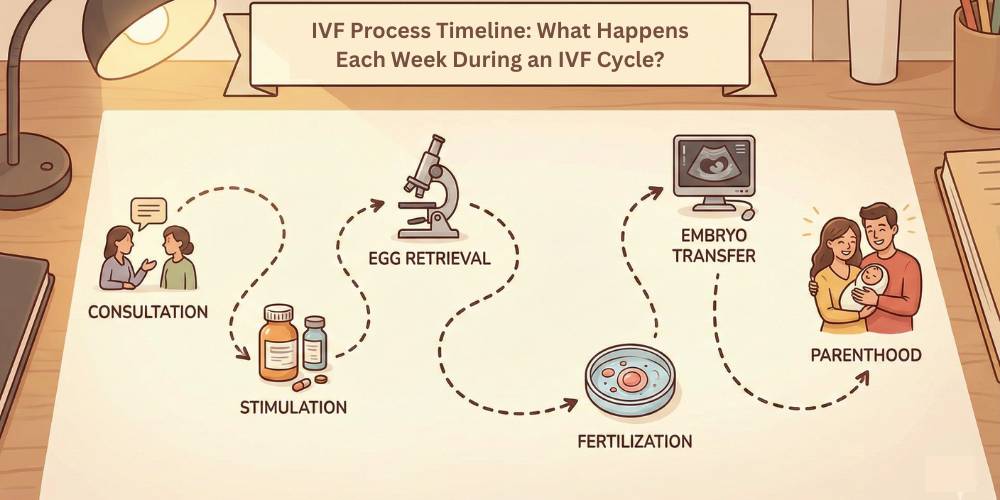
In In-vitro fertilization, the eggs are combined with the sperm in the laboratory to create embryos that are transferred inside the uterus. Through this process, couples that possibly could never conceive naturally now have something to hope for.
This blog gives an in-depth, easy to understand timeline of the ivf process, including timeline of ivf frozen embryo transfer and the all-important 5 Day Blastocyst Implantation Timeline IVF. Consultation & Pre-IVF Tests (Week 1-2): The Start of the Journey
Your IVF journey starts with the assessment of your specific infertility condition under the supervision of the fertility expert. During this step, the doctor goes through the entire history of both partners while ordering the necessary blood tests for hormone levels and pelvic ultrasounds for examining reproductive health. Alternatively, the partner provides a semen sample for analysis so that egg and sperm quality can be compared. Then, a thorough discussion takes place, whereby treatment protocol is explained and planned. This entire phase is focused on ascertaining whether your body is ready, both physiologically and psychologically, to safely and successfully proceed with IVF.
IVF Process Step-by-Step Timeline, preparatory, just emotionally and physically. Each phase, from stimulation of the ovaries to the final test of pregnancy, is an important step in this IVF cycle.
Before stimulation, the doctors may intervene to prepare the body for a successful cycle. This preparation could include the use of birth control pills, hormonal medication, and lifestyle recommendations regarding diet, stress management, and sleep. In tandem with these recommendations, preparation enhances the synchronization of ovarian activities to ensure the IVF cycle proceeds without a glitch or delay.
Before stimulation, the doctors may intervene to prepare the body for a successful cycle. This preparation could include the use of birth control pills, hormonal medication, and lifestyle recommendations regarding diet, stress management, and sleep. In tandem with these recommendations, preparation enhances the synchronization of ovarian activities to ensure the IVF cycle proceeds without a glitch or delay.
Ovarian stimulation is one of the most active phases of the IVF plan. During this Timeline of IVF Process, hormone injections are given for 8-12 days to stimulate the growth of multiple follicles in the ovaries. The monitoring is done regularly, so ultrasounds are carried out every 2-3 days together with hormone blood tests. On this basis, the dosage of the medication may be adjusted by the doctor according to the response observed, thereby fostering the best development of the follicles. The central goal during this phase is to help your ovaries ovulate healthy, developed eggs ready for retrieval.
Once your follicles reach the required size, either an hCG or is applied This injection initiates the final maturation of the eggs and prepares them for retrieval 34-36 hours later. This step is time-sensitive within the entire procedure of IVF because timing greatly affects the quality and maturity of the eggs.
Egg retrieval is a rapid process that usually takes about 15-20 minutes and is done under mild sedation; this is an outpatient, minimally invasive procedure. The doctor collects the mature eggs from the follicles under ultrasound guidance. At the same time, the partner provides a semen sample which the lab processes to isolate the healthiest sperm. Fertilization then commences immediately, with this date being considered the halfway mark of the step-by-step IVF Cycle Timeline.
The embryos are either fertilized naturally by placing eggs and sperm together, or by injecting a single sperm into each egg using ICSI inside the embryology lab. The development of embryos follows a regular pattern:
Due to having a better implantation potential, most clinics prefer to transfer blastocysts at day 5. This timeline of the 5 days of blastocyst implantation in IVF is crucial for understanding what comes next.
If your treatment plan allows for fresh transfer, then a healthy day-5 blastocyst is put directly into the uterus in the same cycle. This is a very speedy, painless procedure with no need for anesthesia. If fresh transfer is not recommended, then embryos are frozen leading into the next phase of the IVF Frozen Embryo Transfer Timeline.
In FET cycles, the endometrium is usually prepared with estrogen and progesterone support. The ultrasonic tests monitor the endometrial lining thickness and once it achieves 7-9 mm then the transfer is scheduled.
The embryos are oftened and transferred with the utmost precision and care. Success rates for FET cycles are often at par or even exceed those of fresh transfers because of improved endometrial conditions.
Typically, implantation proceeds according to the following timeline days after embryo transfer:
Understanding this phase helps patients relate certain pregnancy signs and symptoms toward timing.
Blood tests to confirm pregnancy are performed 12-14 days post-embryo transfer. In case of a positive result, hormone support therapy will continue to exist until the 10-12 week of gestation in order to stabilize the pregnancy. Upon the contrary, if negative, your physician shall evaluate and offer potential options as well as suggestions for subsequent cryopreservation stages to come.
The IVF Timeline gives insight to couples into knowing, thus reducing anxiety and instilling confidence through the treatment journey. Every IVF step, from initiation consultation to fresh or frozen embryo transfer, has been designed with the best chances for conception of a healthy pregnancy. The step-by-step IVF process timeline prepares you emotionally and mentally for the life-altering journey towards parenthood.
Because your parenthood journey deserves expert hands and compassionate hearts. We combine advanced fertility technology, experienced specialists, and personalized care to deliver the highest success rates. Every treatment is tailored, every concern is heard, and every step is guided with transparency. Here, your dreams aren't just treated they are truly valued. Lastly, IVF center in Chennai it gives the changes in condition, health possible by means of medication or related actions.

An IVF cycle typically lasts four to six weeks. From stimulation of the ovaries, monitoring, injection, and ultrasound scans, egg retrieval, and laboratory fertilization are included in the timeline. This way, embryos are put into culture for a couple of days before transfer. Following recovery and subsequent checks could extend the timeline. Length varies depending on how quickly the stimulation works on women.
Egg retrieval is a short, 20 to 30 minutes, performed with mild anesthesia, sedation. Patients are allowed to stay a few hours at the clinic post the procedure for resting. Most women can return home on the same days, although preparation takes several days of stimulation.
After about 10 to 14 days of daily hormone injections, eggs are retrieved. During this time, it is ensured that everyone is monitoring follicle growth through scans and blood tests. With all this information, the doctor determines when the trigger shot occurs to mature the eggs. This backs it up, ensuring that eggs are taken at the right stage for fertilization.
Transfer of embryos usually takes place 3 to 5 days after egg retrieval. The embryologists judge the quality of the embryos before selecting the best ones. The procedure itself is painless and quick and is often performed without anaesthesia. The age and health of the woman influence which embryos are transferred.
Pregnancy is confirmed by a blood test after about 10 to 14 days following the transfer. Generally speaking, home pregnancy kits might not be trustworthy at that early stage. Rather, doctors recommend waiting for an official blood test. This result will give advice on the next steps of care and support.


